

How we work together
Starting with four or five weekly sessions is recommended, so we can get to know each other, explore what you’re experiencing, and decide on the direction of therapy. The therapeutic approaches used will depend on your needs and the changes you’d like to make.
Consultations are conducted in person and online, depending upon your location and preference. For example, your counselling journey may begin with in-person consultations, and you might wish to continue remotely or online, for all sorts of reasons.
Online consultations might suit you if you are needing to travel to care for family, sporting obligations, employment, or business, for parents caring for and accommodating children, for students working on a project, or balancing the demands of school and home, for parents sharing care and work responsibilities, people in crisis, or in transition, for travellers and creatives seeking new shores and projects.
Online counselling can assist you to maintain consistency, connection, and to reach toward your therapeutic goals. At any time you wish, you can rejoin in-person sessions.
Don’t let time or geography get in the way of the good work you are doing for yourself, and the therapeutic relationship created.

“Courage doesn’t happen when you have all the answers. It happens when you are ready to face the questions you have been avoiding.”
— Shannon L Alder
My approach
I draw on a range of modalities and skills depending on you, what you bring to counselling, and your therapeutic goals. The process is determined through our conversations and collaboration. I respect that you know your life better than anyone else, and you can depend on me to really listen, reflect back insights and guide the process.
Some of the modalities I may draw from include somatic awareness, solutions-focused therapy, narrative therapy, nature-based therapy, acceptance and commitment therapy, mindfulness, polyvagal and trauma-informed approaches. Issues I can help with include:

Anxiety
•
Stress
•
Grief and Loss
•
Learning difficulties
•
Life Transitions & Adjustment
•
Self Esteem
•
School & Learning
•
Neurodivergence
•
Personal Development
•
Family Dynamics
•
Anxiety • Stress • Grief and Loss • Learning difficulties • Life Transitions & Adjustment • Self Esteem • School & Learning • Neurodivergence • Personal Development • Family Dynamics •

Life with animals
Our family dynamics include our pets, who hold a very special place in our hearts and our homes. Personally, I love being outdoors in the elements and spending time alongside my dogs, Elkie and Zeus, and feline friends, Tilly and Nala.
If you have lost your spark after losing your pet, you might be feeling flat, despondent, foggy and confused, guilty, lost or isolated, unmotivated, and unable to function as normal. These are all valid responses to losing someone you love, someone who was a big part of your life. Although you might have the subtle impression that others don’t fully understand or are not so subtly pressuring you to move on, your grief is real and perfectly normal. If this sounds familiar, and you’d like some help understanding and coming to terms with the loss of your cherished pet, come and see me.
Together we can explore what you are experiencing, develop a toolkit of coping strategies, and create ways of living with more hope and joy, while honouring the loss of your companion.
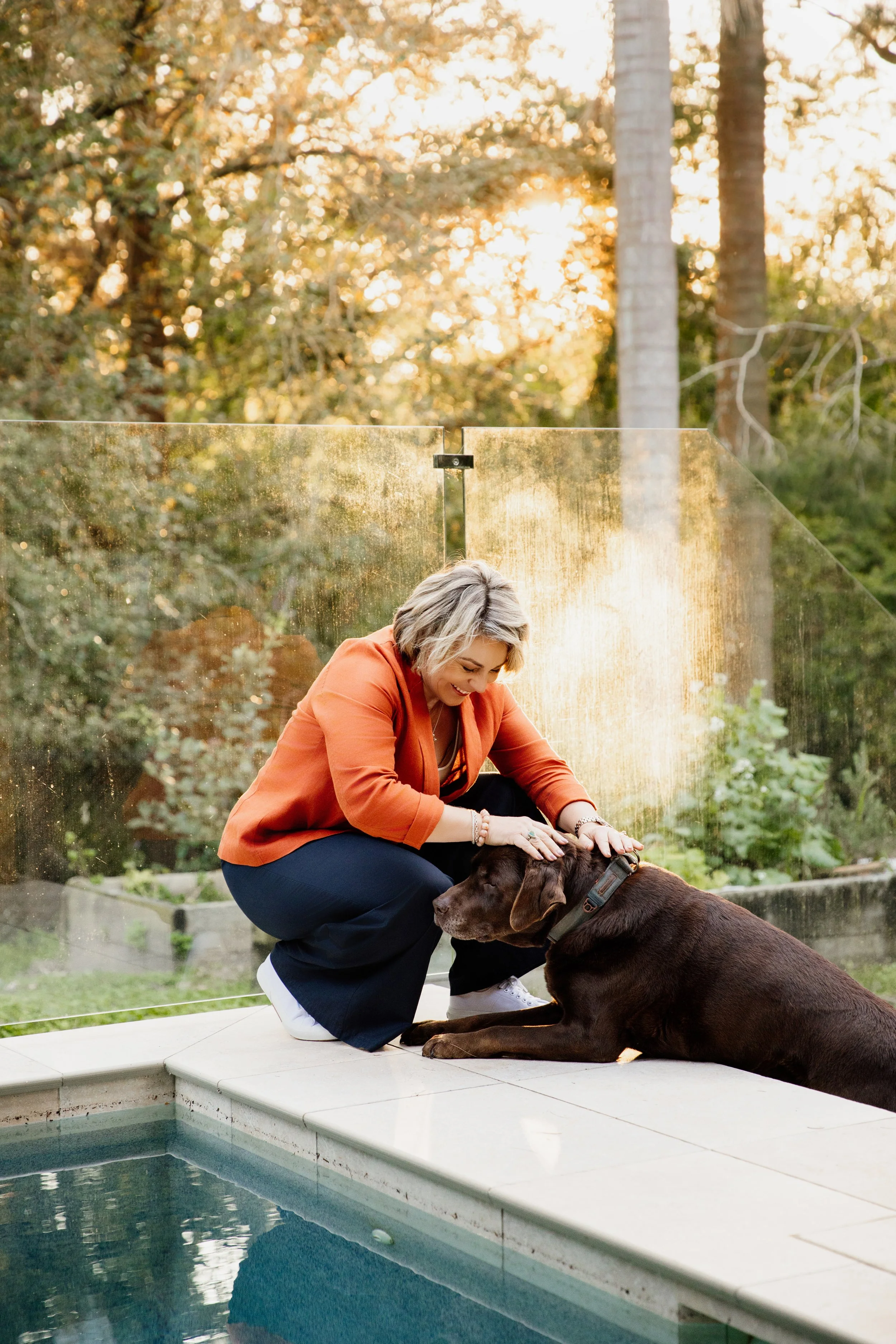
“Dogs have a way of finding the people who need them and filling an emptiness we didn’t ever know we had.”
— Thom Jones
A word about spirituality
I am accepting of differences and celebrate diversity in relation to how people create meaning in their lives. I feel there is richness and vitality in knowing that all kinds of people with differing backgrounds and beliefs live in communities upon the earth, in harmony with each other, and with the earth herself. This seemingly perfect scenario is based in values of connection, autonomy, optimism and hope, which underpin many therapeutic motivations and goals.
You can come to therapy with your religious and spiritual beliefs and be assured that I will not expect you to alter or minimise yourself to receive compassionate and professional therapy.
As an ethical principle, in my practice I do not need to share the same world view, opinions or personal beliefs, for you to receive dignified therapeutic support, to develop greater self-awareness, heal, grow, and build your resilience to weather whatever life brings your way.


“Happiness is when what you think, what you say, and what you do are in harmony.”
— Mahatma Ghandi